1 Gram: Things with Pic That Weigh 1g 2026
1 Gram is a minuscule unit of mass that weighs just 1/1,000th of a kilogram, roughly 0.035 ounces.
This article will provide the answers to the questions “What is measured in grams?” and “What is one gram?”, revealing their significance in both scientific and everyday contexts.
How Heavy is 1 Gram?
A paperclip, often used as a quick reference, weighs around 1 gram, illustrating how this unit is a mere fraction of a kilogram, as 1 gram equals 1/1000 of a kilogram.
1 gram is approximately 0.035 ounces and 0.002 pounds, making it feel almost weightless to the touch.
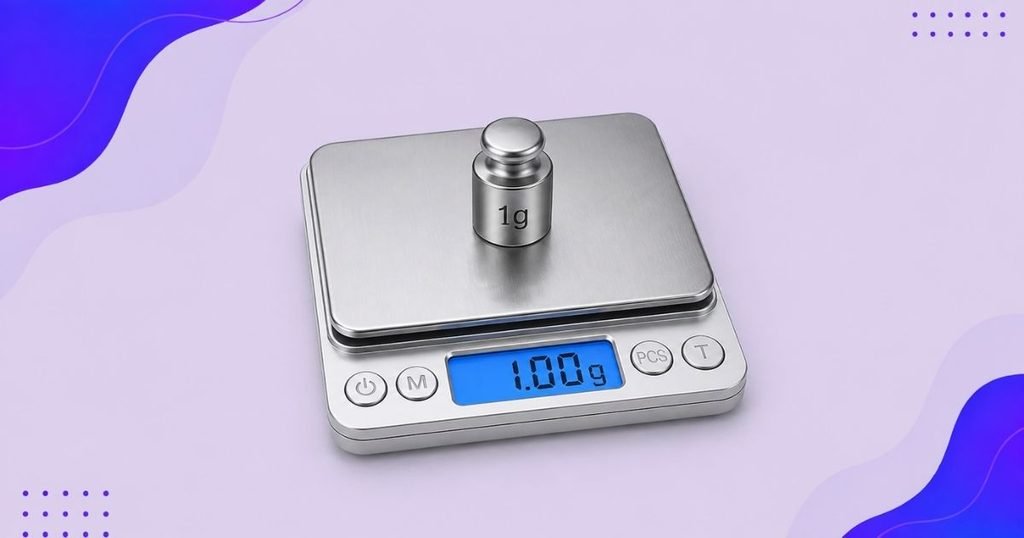
Differentiating between 1 gram and 2 grams by hand can be quite challenging, highlighting the precision required in fields like cooking and science.
1 Gram is Equal to:
1 gram measurement equals 1,000 milligrams, making it a crucial unit for medication dosing, where precision is vital.
In terms of conversion, 1 gram is approximately 0.035 ounces or 0.002 pounds, which can assist in accurate cooking measurements, especially for those weighing ingredients.
1 gram corresponds to 1 milliliter of water, highlighting the seamless relationship between volume and weight in culinary practices.
For jewelry enthusiasts, 1 gram is equivalent to 5 carats, emphasizing its importance in the domain of gemstones.
- 1 gram = 1,000 milligrams (medication dosing)
- 1 gram = 0.035 ounces (food/cooking)
- 1 gram = 0.002 pounds (general weight)
- 1 gram = 1 milliliter of water (volume-to-weight)
- 1 gram = 5 carats (jewelry/gemstones)
Common Items That Weigh 1 Gram
When considering common things that weigh 1 gram, a variety of everyday objects come to mind.
Precise examples include a staple from your desk, a paperclip, or a single sugar cube, each a testament to how weight can be both negligible and significant in daily life.
| Item | Weight | Quick Visual / Fun Fact |
|---|---|---|
| US Dollar Bill | Exactly 1 g | All bills ($1 to $100) weigh the same • 75% cotton, 25% linen |
| Standard Paperclip | Exactly 1 g | Gem-style • Used in WWII as resistance symbol in Norway |
| Single Raisin | ~1 g | Dried grape • 28 raisins = 1 oz (28 g) |
| Thumbtack / Push Pin | ~1 g | Standard size • Holds photos on cork boards |
| Piece of Chewing Gum | Exactly 1 g | One stick or chiclet • Same weight sugar-free or regular |
| Ballpoint Pen Cap | ~1 g | Bic-style • Has air holes to prevent choking |
| Pinch of Salt | ~1 g | Thumb + forefinger • “Salary” comes from Latin for salt |
| Small Birthday Candle | ~1 g | 2-inch wax candle • 12 candles = 12 g |
| Single Grape | ~1 g | Average fresh grape • 60–80 in a bunch = 60–80 g |
| Japanese 1 Yen Coin | Exactly 1 g | 100% aluminum • Can float on water |
| ¼ Sugar Packet | Exactly 1 g | Full packet = 4 g • Restaurant coffee tables |
| Plastic Bottle Cap | ~1 g | Soda/water cap • Billions made daily |
A US Dollar Bill
A US dollar bill, whether it’s a $1 or a $100, weighs precisely 1 gram, blending durability with practicality in its design.

Crafted from a unique composition of 75% cotton and 25% linen, these bills boast a consistent size of 6.14 inches in length and 2.61 inches in width.
A Standard Paperclip
A standard Gem-style paperclip, weighing just 1 gram, is a remarkable yet often overlooked item.
Made from steel wire, it is approximately 1.5 inches long and, when straightened, can measure 3–4 inches.
This common office item, beyond its everyday utility of binding papers, carries historical significance as a symbol of resistance during WWII in Norway, where it was worn as a silent protest against Nazi occupation.
A Single Raisin
It weighs approximately 1 gram and is simply a dried grape, the drying process stripping away about 80% of its water content, resulting in a concentrated burst of sugars and nutrients.
An ounce of raisins, which equates to around 28-30 individual pieces, serves as a handy reference for baking measurements.
A Thumbtack or Push Pin
It weighs approximately 1 gram, features a metal pin and a plastic or metal head designed for lightweight durability.
These common items are indispensable in homes and offices, primarily used for securing photos and papers on bulletin boards.
A Piece of Chewing Gum
It weighs approximately 1 gram and serves as a fascinating intersection of science and enjoyment.

This seemingly simple stick or chiclet comprises a gum base, sweeteners, and flavoring agents, available in both regular and sugar-free varieties.
The practice of chewing goes back to ancient civilizations, with the Ancient Greeks indulging in tree resin for its unique texture and flavor.
A Pen Cap from a Ball Pen
A typical ballpoint pen cap, weighing approximately 1 gram, is a lightweight accessory crafted from durable plastic.
Most often found on BIC-style pens, these caps feature ventilation holes designed as a safety measure, effectively minimizing choking risks for children and ensuring peace of mind for parents and educators alike.
A Pinch of Salt
It is approximately 1 gram and is a culinary measurement that might seem trivial, yet it carries a rich historical significance.
The term “salarium,” from which we derive the word salary, refers to the payments given to Roman soldiers in the form of salt, highlighting the vital role this mineral played in ancient economies.
A Small Birthday Candle
It weighs approximately 1 gram and, measuring around 2 inches long, is often crafted from paraffin wax or beeswax.

Despite its short burning time, this tiny decoration carries with it a wealth of tradition, from the ancient Greek custom of placing candles on cakes to symbolize the moon and invoke the favor of lunar deities, to the modern custom that emerged in 18th-century Germany, where candles marked each year of a child’s life.
A Single Grape
A single grape, weighing approximately 1 gram within a typical range of 0.8 to 1.2 grams, comes in green, red, and black varieties.
Each tiny fruit is a powerhouse of natural sugars, vitamins C and K, and beneficial antioxidants, making it an underappreciated gem in the world of nutrition.
A Japanese 1 Yen Coin
A 1 yen coin, weighing exactly 1 gram and crafted from 100% aluminum, is not only lightweight but also remarkable for its ability to float on water, showcasing the effects of surface tension.
With a production cost that often exceeds its face value, this coin presents a unique economic paradox.

Its design features a motif of a young tree seedling, deeply rooted in symbolism, conveying themes of growth and prosperity essential to Japanese culture.
A Sugar Packet
A sugar packet, typically containing about 4 grams of sugar, can serve as a seemingly innocuous addition to your morning coffee, but its impact on daily sugar consumption is significant.
At restaurants, these little packets often punctuate coffee tables, ready to sweeten what many consider a mundane beverage.
Just one quarter of a packet equates to about 1 gram of sugar, a measurement that might seem negligible until you consider that the American Heart Association recommends no more than 6 grams of added sugar per day for women and 9 grams for men.
A Plastic Bottle Cap
A standard plastic bottle cap, typically made from lightweight polyethylene plastic, weighs around 1 gram and is a crucial component for soda, water, and juice bottles.

This minimal material usage allows for efficient mass production, enabling companies to ship products with reduced weight and costs.
How to Estimate 1 Gram Without a Scale?
Estimating 1 gram without a weighing scale can be simple with household reference objects. Here are some effective methods:
The Paperclip Method
- Use a standard paperclip as a reference point.
- Hold the paperclip in your palm to gauge its weight.
- Compare the unknown object’s weight to the familiar sensation of the paperclip.
- Practice estimating other weights, like 5 grams (five paperclips) and 10 grams (ten paperclips), to develop your hand sensitivity.
Currency Comparison
- A US dollar bill weighs approximately 1 gram, making it an excellent reference.
- Conveniently check the weight of unknown objects against a dollar bill from your wallet.
- This method works well for flat, lightweight items but is less effective for denser objects like jewelry or screws.
The Water Volume Method
- Understanding that 1 milliliter of water equals approximately 1 gram can aid in estimation.
- Use tools like a medicine dropper, syringe, or measuring spoon to measure water.
- Fill a small container with room-temperature water for accurate volume-to-mass correlation.
Conclusion
1 gram is an intriguing measure of weight that helps us contextualize everyday objects in our lives.
From a single paperclip to a small marble, understanding what weighs 1 gram can enhance our comprehension of scale and measurement.
FAQs
How Much is One Gram?
One gram is a metric unit of mass equivalent to 1/1000 of a kilogram. It is commonly used in everyday measurements.
How Much is a Gram Visually?
A gram is visually comparable to a single raisin, a standard metal paperclip, or a small grape.
What Weighs a Gram?
A gram is a metric unit of mass equal to one-thousandth of a kilogram, commonly used for light items. Specifically, it is represented by the mass of 1 milliliter of pure water at 4°C.